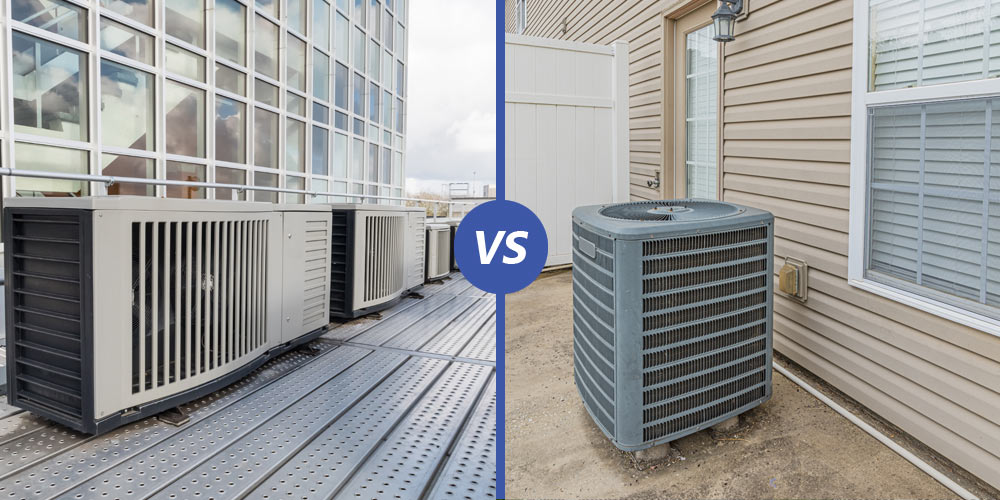
Whether at home or at business, air conditioning systems are essential to preserving interior comfort. However, the types of air conditioning systems installed reflect the major differences between the demands of a business building and a residential home. Although temperature control and comfort are the goals of both systems, their size, design, complexity, and performance requirements differ.
Here let’s figure out the key differences between residential and commercial air conditioning systems, helping you understand which system suits your needs and how each operates.
-
Considering the System Size and Capacity
One of the most obvious differences between residential and commercial air conditioning systems is the size and capacity.
- Residential Air Conditioning: Designed for smaller spaces like homes or apartments, residential units are typically smaller in size and have a lower capacity. They are built to cool single-family homes and are easy to install and maintain.
- Commercial Air Conditioning: Commercial systems are significantly larger and have much higher cooling capacities since they are responsible for maintaining comfortable temperatures in large spaces, such as offices, retail stores, factories, or multi-story buildings. These systems are built to handle heavy usage and extended hours of operation, making them more complex and durable than residential units.
-
Know The Difference To Tackle Complexity of Installation
Another major difference between residential and commercial air conditioning systems lies in the complexity of installation.
- Residential Installation: Residential AC units are relatively simple to install. Typically, a technician will install the outdoor compressor, connect it to the indoor air handler, and set up the necessary ductwork. Most residential installations are straightforward and do not require special zoning or custom setups.
- Commercial Installation: In contrast, commercial systems often require much more complex installation processes. Many commercial systems need custom ductwork, multiple zones, and large-scale installations that span across several floors. Additionally, commercial properties may need specialized units, such as rooftop systems, which require crane installation and reinforcement of structural elements.
-
System Design and Configuration Of Air Conditioning Systems
The design and configuration of air conditioning systems also vary greatly between residential and commercial units.
- Residential AC Design: Residential air conditioning systems are typically single-phase units designed to cool individual homes or apartments. These systems are simple in design, with a basic thermostat that controls the cooling system for the entire house.
- Commercial AC Design: Commercial systems are often designed with multiple zones, allowing different areas of a building to be cooled independently. These systems are typically three-phase units that can handle higher loads and operate for longer periods. Commercial systems may also include advanced control systems to regulate temperature, humidity, and air quality across various sections of a large building.
-
Maintenance and Repair Needs For Systems Differ
The maintenance and repair requirements of residential and commercial air conditioning systems differ due to their size and complexity.
- Residential Maintenance: Residential systems are easier to maintain, requiring regular filter changes, coil cleaning, and occasional professional servicing. Repairs are generally less frequent and less costly than those for commercial systems due to the smaller scale and less intensive usage.
- Commercial Maintenance: Commercial air conditioning systems require more frequent maintenance and are often part of a long-term maintenance plan. These systems undergo higher stress from continuous use and large operational spaces, so their components, such as compressors and fans, must be inspected regularly. Maintenance tasks for commercial systems are also more complex and expensive, often requiring specialized technicians.
-
Energy Efficiency For Both Air Conditioning Systems
Both residential and commercial air conditioning systems prioritize energy efficiency, but their approaches differ.
- Residential Energy Efficiency: In homes, energy-efficient air conditioning systems can make a significant difference in reducing energy bills. Residential units typically have high Seasonal Energy Efficiency Ratio (SEER) ratings and are built to provide sufficient cooling while minimizing energy consumption.
- Commercial Energy Efficiency: Commercial systems are designed for large-scale use, and energy efficiency is critical to minimize operational costs. Many commercial units are equipped with advanced energy-saving features, such as variable speed drives, economizers, and energy management systems that help to reduce energy consumption over time, especially in large buildings.
-
Cost Consideration For Residential and Commercial Setups
The cost of installing and maintaining air conditioning systems differs greatly between residential and commercial setups.
- Residential Costs: Residential systems are generally less expensive to purchase and install. The overall cost is influenced by factors such as the size of the home, type of system, and installation complexity.
- Commercial Costs: Commercial air conditioning systems require a higher upfront investment due to their size, complexity, and custom features. Additionally, the ongoing costs of maintenance and repairs are higher, but the larger scale of the system justifies these expenses by providing comfort to more people across a wider area.
Conclusion – Its Key To Make Right Choise For Later Installing And Maintaining
Understanding the key differences between residential and commercial air conditioning systems is essential for making the right decision when it comes to choosing, installing, and maintaining a cooling solution. Residential systems are simpler, smaller, and less costly, while commercial systems are larger, more complex, and built to handle extensive use. Whether you’re a homeowner or a business owner, selecting the right system is critical to ensuring optimal comfort and energy efficiency.
At Adapt Mechanical Service, we specialize in Air Conditioning Installation Dorset, Ventilation Solutions Dorset, AC Repair Dorset, and Energy-Efficient Air Conditioning Dorset. Whether you need a residential or commercial air conditioning solution, our team of experts is here to provide customized service tailored to your specific needs. Contact us today for a consultation!
Leave a Reply